
Caldwell County Court Docket Searches
Start with the North Carolina eCourts Portal. It is the official online tool for a Caldwell County court docket search. The public side can display an eligible Case Summary. It is also called a Register of Actions. It can help you find hearings. What you get is an identifier and a status view. It is not a promise that every filed document sits online. For a specific date, the official Caldwell calendar pages beat a broad name search. Need a certified copy or an answer about a restricted file? Call the Clerk of Superior Court.
Gather a few things first. The county, the case type, and the case number all help. A name search can pull up similar names. So confirm the case reference before trusting a result as the right matter. The Portal's support materials say anonymous public searching works fine. Registration mainly adds My Cases features rather than more public access. Keep any court notice close by. It often carries the most reliable number and division detail for a Caldwell County docket search.
- Open the official eCourts Portal and choose Smart Search for an eligible public Caldwell County case.
- Enter a case number exactly as printed, or use a party-name search and carefully match the returned county and case type.
- Review the Case Summary or Register of Actions for available events, hearings, disposition, and financial information.
- Use Search Hearings or the official court-date tools when the immediate question is a setting.
- Ask the Caldwell Clerk about an unavailable item, a paper-file check, a copy, certification, or a date that appears inconsistent.
Caldwell County Portal Search Checks
One search field cannot answer every court question, so the Portal splits the work. Smart Search is the route to a public case summary. Search Hearings is built around the setting itself. NC Judgment Search has its own indexed-judgment fields. Match the tool to the question. Then verify the county and the case reference before reading anything into a Caldwell County court docket display.
| Portal tool | Useful search fields | What it helps locate |
|---|---|---|
| Smart Search | Party name or case number | Eligible public case information and Case Summary details |
| Advanced search | Case category filters | Civil Actions, non-confidential Special Proceedings, Estates, and Criminal Actions |
| Search Hearings | Case number, party or business, attorney, judicial officer, courtroom | A scheduled court event, subject to change |
| NC Judgment Search | Party or case number, type, status, location, judgment date | Indexed judgment information |
Portal guidance suggests at least four case-number characters and gives wildcard instructions for name searching. Those tricks narrow a query, but a broad match is still just a lead. Verify it. Never turn an online result into a profile of a person. A docket is a court-process record. It is meant for locating a known case, following a public matter, or confirming a court setting.
Court Dockets: What They Show
North Carolina calls the Portal's Case Summary a Register of Actions. For an eligible Caldwell County case, the fields may include the case number, assignment, parties, cause of action, events, hearings, disposition, and financials. That display helps you tell a filing event from a hearing, and a hearing from a recorded outcome. Two limits matter. Not every document becomes public, and the screen never replaces the Clerk-held file.
| Case number | The court identifier. Enter it exactly as shown on a notice or court document. |
|---|---|
| Case information | Available case type and related basic details for the public matter. |
| Assignment | Available court, judicial, or courtroom assignment information, not a guarantee of a current setting. |
| Events | Recorded case actions or filings. An event is not necessarily a final disposition. |
| Hearings | Scheduled proceedings. A hearing may be continued, reset, or canceled. |
| Disposition and financials | Available reported resolution/status and case-linked financial information. |
A calendar does a different job. It lists the matters set for court. Those settings may be for status, a motion, trial, plea, or another step. A listing proves nothing about what happened at that setting. Keep date, event, disposition, and index date as separate labels. Check the active official source whenever timing matters.
Caldwell County Case Number Literacy
The eCourts pattern has four parts. There is a two-digit filing year, a case-type letter, a six-digit sequence, and a three-digit county identifier. North Carolina publishes the pattern. But guessing a county code or reshaping a legacy number is poor Caldwell County practice. Instead, copy the complete reference exactly as it appears on the court notice. A string like YY-X-######-### shows the pattern only. It is not a Caldwell case number.
- Register of Actions
- The chronological Case Summary view available through the Portal.
- Calendar
- A schedule of matters set for court, not a final decision.
- Disposition
- A recorded resolution or status that should be read with its date and field label.
- Continuance
- A matter moved from a scheduled court date.
Give older Caldwell references an extra check. Legacy systems were converted into Enterprise Justice when Caldwell joined eCourts in October 2025. Even so, a historical paper file may still matter. Turn to it when the online material runs thin or an older reference behaves oddly.
Caldwell County Courts and Their Dockets
Caldwell sits in North Carolina's unified General Court of Justice. Local materials place the county in District 36. The Clerk of Superior Court serves as the local trial-court records office. That office handles files, dockets, and indexes. Which division handles a case depends on the case type alone. The municipality in an address and the police agency involved make no difference.
| Court or office | Docket covers | Where to search or ask |
|---|---|---|
| Superior Court | Felony criminal cases, civil disputes over $25,000, and District Court appeals | eCourts Portal for eligible public information; Caldwell Clerk for the file |
| District Court | Misdemeanors, infractions, family, juvenile, and civil matters generally at or below $25,000 | eCourts Portal, official calendars, and Caldwell Clerk |
| Magistrate matters | Qualifying small claims up to $10,000 and specified judicial processes | Clerk and magistrate routing for the correct state-court record |
| Federal court | Federal filings, not Caldwell state trial-court cases | Western District CM/ECF and PACER, not the Caldwell Clerk docket |
North Carolina sorts most local matters through its District Court, and the dollar limit on civil claims there comes from G.S. 7A-243. The court-types explanation walks through how each level works. So when you read a Caldwell County court docket, the case type is the fact that matters. The town name attached to a filing is not its own docket system.
Where does the Caldwell County courthouse sit? The Caldwell County court page lists the official details, including which division handles which cases.
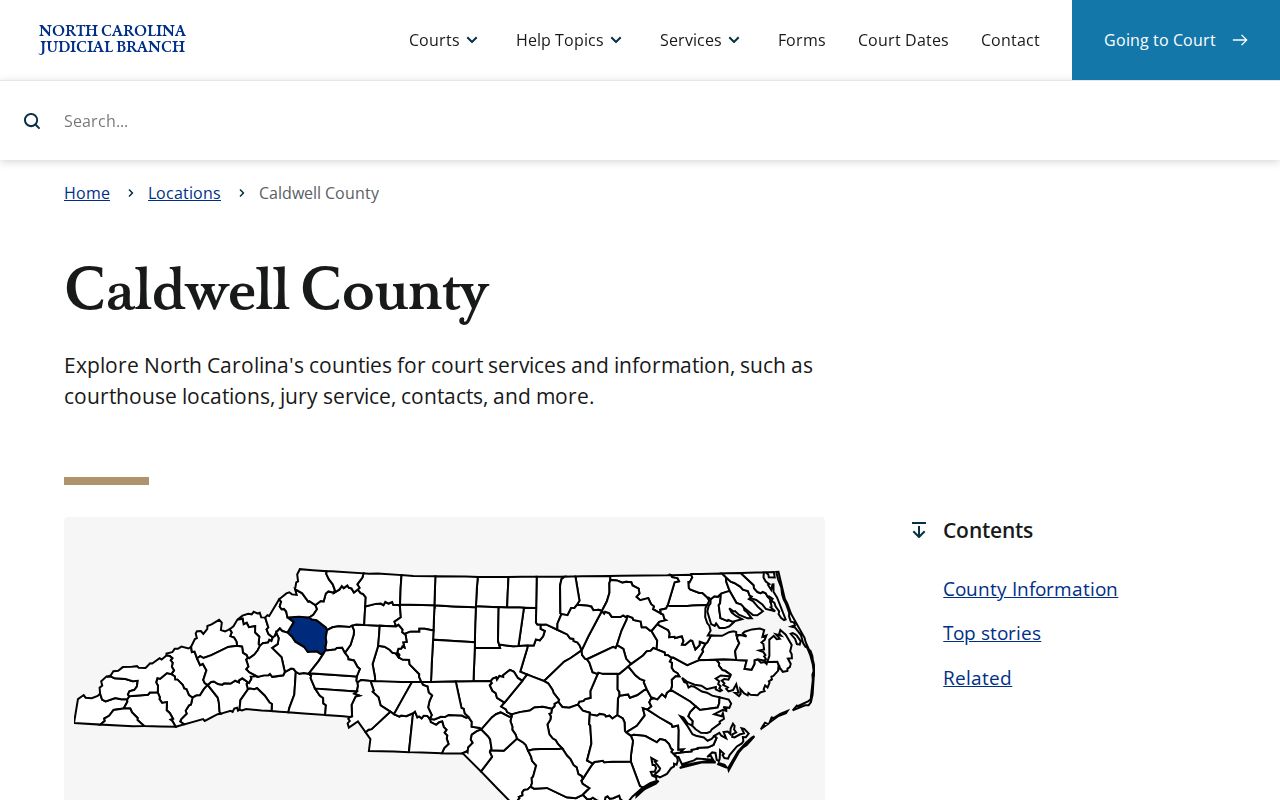
That county court location page anchors the shared state-court route. Caldwell County docket searches across the county run through it.
Caldwell County eCourts Conversion
Caldwell went live on eCourts on October 13, 2025, one of the final 13 counties in the statewide deployment. The NCAOC launch announcement marks that milestone. It reset the online baseline. The Portal, Enterprise Justice, North Carolina eFiling through Tyler File & Serve, and eligible online payment tools all now sit inside the state system.
The conversion did not erase the local Clerk's role. NCAOC says former ACIS, VCAP, OCAP, CCIS, and PayNCticket information was converted, though a local paper file can still hold historical material. The practical sequence is simple. Search the current state system first. Compare any time-sensitive date with the calendar. Then ask the Caldwell Clerk about a file gap or a document request. The county history resource adds context on Caldwell's long-standing county-seat court access.
The county history source rounds out the modern eCourts milestone. Historic courthouse practices, though, do not control a current docket search.
Court Dates and Settings in Caldwell County
For a scheduling question, go straight to the official calendar. Caldwell County offers a criminal calendar and a civil calendar, each scoped to the county. Search Hearings narrows things further by case number, party or business, attorney, judicial officer, or courtroom. Keep one caution in mind. A listed setting tells you when a matter is scheduled, not how it ended.
Dates shift. Weather and court administration can both move a Caldwell County hearing. Treat any old notice with doubt. NCAOC's court-date guidance sends anyone with a missed or unclear date to the Clerk. Cached pages never override a current court calendar. Historic local rules don't either. Neither replaces direct confirmation from the Clerk's office.
Note: A court date answers the "when" question. The Case Summary is the better place for available events and recorded status.
Caldwell County Calendar Checks
Before you trust any Caldwell County court docket entry, run four checks. Confirm the county is right. Confirm the case type matches. Match the case number or the correct party name, and make sure the hearing or calendar data is still current. An older Caldwell Criminal Case Docketing Plan from the courts system still uses helpful terms like administrative setting and trial calendar. But it was revised in 2004. That makes it history, not authority. It cannot set a 2026 deadline, a priority rule, or a courtroom assignment.
Current setting rule: a calendar listing means that a proceeding was set. Confirm a changed, urgent, or unclear Caldwell County court date with the Clerk before relying on it.
Dates in a docket can mislead if you read them alike. A filing date, an event date, a hearing date, a disposition date, and a judgment-index date all appear in court information. Each marks a different action. A schedule can also shift before the hearing happens. One more caution: never infer a disposition label from a hearing entry alone. Need a fuller date-specific route? See the Caldwell County Court Schedule.
Docket Access Under North Carolina Law
G.S. 7A-109 puts clerks in charge of court records, files, dockets, and indexes, and it opens them to the public during ordinary hours unless another law says otherwise. That statute frames a practical access ladder for Caldwell County court records. Portal provides eligible online information. Official schedule tools carry calendar information. The Clerk handles any local file or copy request.
Key access limits:
G.S. 7A-109 identifies the Clerk’s role in maintaining local court records and dockets.
G.S. 7B-3000 protects juvenile records from broad public disclosure.
G.S. 15A-151 limits disclosure of expunged records.
North Carolina's public-records overview makes one point worth repeating. Access rules and redaction rules both apply. Just because a case falls in a public category does not mean every document is open. An address, attachment, or case field can stay closed. Sealed and confidential material stays out of Portal. When an item you expect is missing, the right move is a narrow Clerk question about a known public file. A broad search for personal history is not the purpose of the system.
Caldwell County Docket Limits
Thin results on a Caldwell County docket search are often by design. The Portal FAQ points to real boundaries. Sealed and confidential records, juvenile material, unreturned warrants, protective-order-related limits, and access roles all limit what appears. Expunged records carry statutory confidentiality limits of their own. So a blank result is not proof that a file never existed.
Other times the miss has a simpler cause. A spelling difference can hide a match. So can an incomplete conversion, a paper-file issue, or a filing in another county. A Caldwell County court docket serves best when you already know a matter. Follow it, confirm a setting, check available court events, or find where to request a public file. It is not legal advice, and it is not a tool for judging a person. The Clerk can explain what is public and what can be copied.
For routing questions, start with the Caldwell contact directory. It lists the state court's local phone and office details.
Think of the directory as a switchboard for Clerk and division questions, not a promise that any office can release restricted court information.
How the Clerk Keeps Docket Records
The Caldwell Clerk of Superior Court keeps the local court files, dockets, and indexes. That office is the right stop for a paper file, a local copy, certification, or anything missing from the online docket. NCAOC states this plainly. Its administrative records office holds no local court documents and cannot certify local court records. So ask for the court file locally. Do not route it through an administrative-record request aimed at NCAOC material.
A focused request helps. Give the county, the case number if known, and the document or docket item. Add an approximate date and whether you need a plain or certified copy. The statewide schedule prices each item separately. A first page, additional pages, a certificate under seal, and exemplification each get their own entry. Those published amounts are not a promised local total. So confirm availability and current cost with the Clerk before ordering.
Caldwell Clerk of Superior Court
216 Main St. NW
Lenoir, NC 28645
828-759-3500
The Caldwell County Courthouse page lists general courthouse hours and public parking guidance.
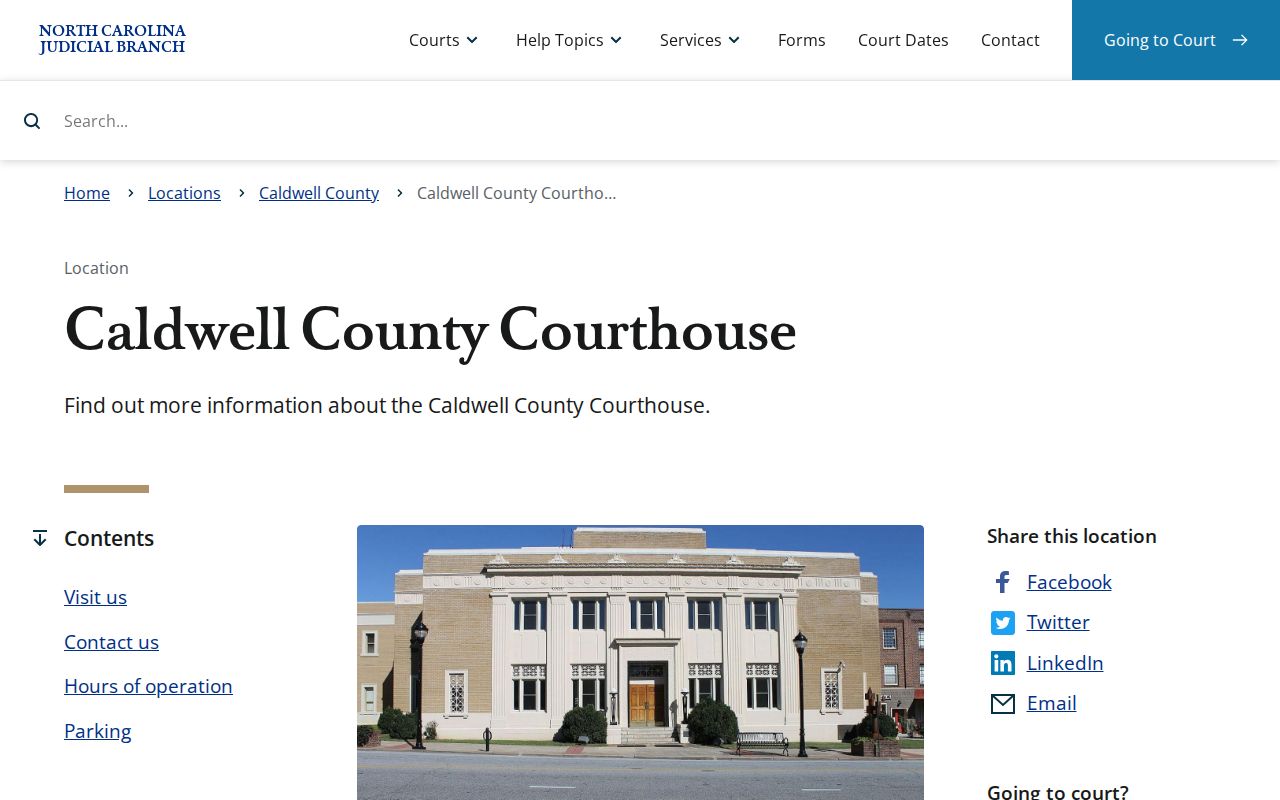
Courthouse details can shape your trip, but the Clerk is the one who confirms the document, the counter process, and whether access is granted.
Caldwell County Court Record Copies
A Portal Case Summary will never serve as a certified court record. Copies, certificates under seal, and exemplifications each carry their own line in the statewide January 2025 miscellaneous-cost schedule. So know which one you need. Treat those figures as starting points. Before paying anything, let the Caldwell Clerk confirm the item. Ask whether it is public, whether the office can produce it, and what the current charge is.
| Requested item | Published statewide amount | What to confirm locally |
|---|---|---|
| First page of a document | $2 | The document’s availability and final local total |
| Each additional page | $0.25 | Page count and copy format |
| Certificate under seal | $3 | Whether the record needs this form of authentication |
| Exemplification | $10 | Whether this higher authentication is appropriate |
Name the document or docket item you want. Give an approximate filing date. A focused request like that lets the Caldwell Clerk pull the right file fast. It also keeps your court-record request from being read as a fishing expedition for personal information. Keep in mind that a transcript, a court reporter's record, a police report, and non-confidential district-court audio do not travel the same road. None is a simple substitute for a Clerk copy.
Note: Confirm the record and the current fee with the Caldwell Clerk before sending payment. Do not trust a published statewide amount.
City-by-City Court Dockets in Caldwell County
Lenoir, Sawmills, Granite Falls, Hudson, and Gamewell top the 2020 Census list. These are Caldwell County's incorporated municipalities. None of the five runs its own municipal court or publishes a municipal docket. Their cases move through North Carolina's state courts. A city police record or town file is not the same as a state court file. For a certified copy, count on the county Clerk, not the town hall.
City pages use the town as a local starting point. Then they send the court question to the right state system. The split is simple. The Portal carries eligible public case information. The official calendar shows a scheduled setting. The Caldwell County Clerk handles a local court file, copy, certification, or access question.
Lenoir Court Records
2020 Census population: 18,352. County-seat context and state-court routing.
Sawmills Court Records
2020 Census population: 5,020. Town administration and county-court distinction.
Granite Falls Court Records
2020 Census population: 4,965. Agency record and Clerk-file boundary.
Hudson Court Records
2020 Census population: 3,780. Town-police context and state docket route.
Gamewell Court Records
2020 Census population: 3,702. Town geography and shared state-court system.
Population rankings come from the 2020 Census incorporated-place table.
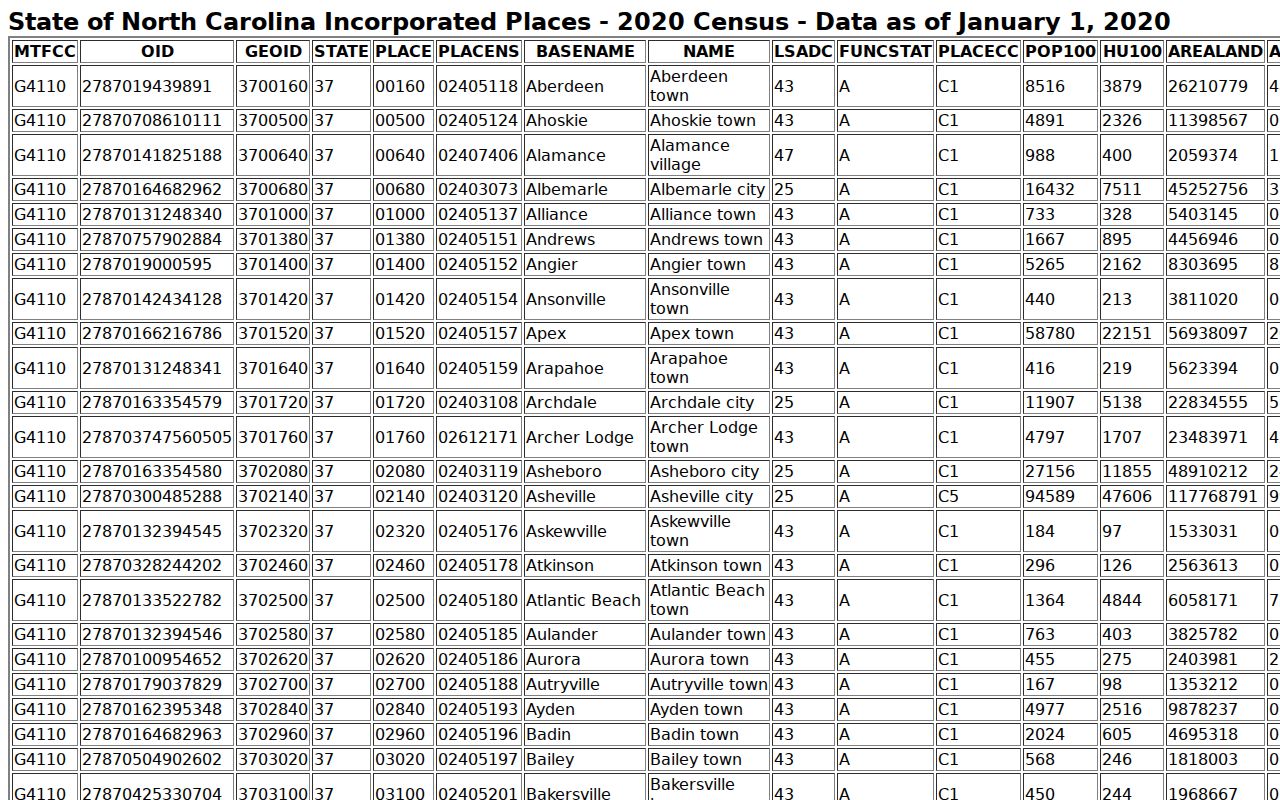
The ranking sets page scope only. It says nothing about court volume, case outcomes, or any separate local court jurisdiction.
Caldwell County Federal Docket Boundary
Not every filing from a Caldwell address belongs to a Caldwell County state docket. Federal matters are different. They use the Western District of North Carolina's CM/ECF case-information system. PACER's public-access route is the other one. The Caldwell Clerk cannot stand in for either one, and neither can the North Carolina eCourts Portal.
Let the filing court decide the system. The Western District's Statesville courthouse stands apart from the state courthouse in Lenoir. PACER terms differ too. So does federal copy access. Clerk certification and North Carolina court-file requests follow their own rules.
Map and Directions to the Caldwell County Courthouse
Superior and District Court files for Caldwell County are kept by the Clerk of Superior Court at the Caldwell County Courthouse, 216 Main St. NW, in downtown Lenoir. The present building is a 1905 two-story Neo-Classical courthouse that saw a 1928 remodel and expansion, so it is a historic structure still serving as the working county-seat courthouse. Mail for the clerk goes to P.O. Box 1376, Lenoir, NC 28645.
Caldwell County Courthouse
216 Main St. NW
Lenoir, NC 28645
828-759-3503
Monday through Friday, 8:00 a.m. to 5:00 p.m.
Public parking is in lots in front of and behind First Baptist Church next door to the courthouse, though the courthouse page does not promise available spaces or describe a security-screening procedure. For the Clerk's office directly, call 828-759-3500.