
Hudson Court Docket Searches
For a Hudson court docket search, the official North Carolina eCourts Portal is the tool that holds eligible public case information. Hudson itself posts no separate local court search. On Smart Search, you can type a party name or a case number. The case number is the better start. It lets you match the right county, type, reference, and status. You avoid trusting a similar-sounding name.
Think of Hudson court searches as three paths that work together. The Portal can return an eligible Hudson Case Summary, hearing details, and judgment-search information. The official calendar answers what is scheduled now. The Caldwell Clerk handles a file, a copy, a certification, or an access question. Run them in order. That habit keeps you from reading one screen as a whole court history.
- Start a Hudson-related state court search in the eCourts Portal.
- Enter the case number exactly as printed, or use a careful party-name search.
- Confirm Caldwell County, case type, case reference, and status before accepting a Hudson result.
- Use Search Hearings or the official calendar for a Hudson court date.
- Ask the Caldwell Clerk about a specific Hudson court file, plain copy, certified copy, or unclear setting.
Hudson Court Record Routes
Hudson residents meet three separate public information routes. The Town of Hudson Police Department posts town and police contact at 550 Central St. For a Hudson agency or municipal-service question, that is the right door. It is not proof that police keep a public judicial docket, a judgment, or a Clerk-certified court document. A state court record lives in the countywide court system instead.
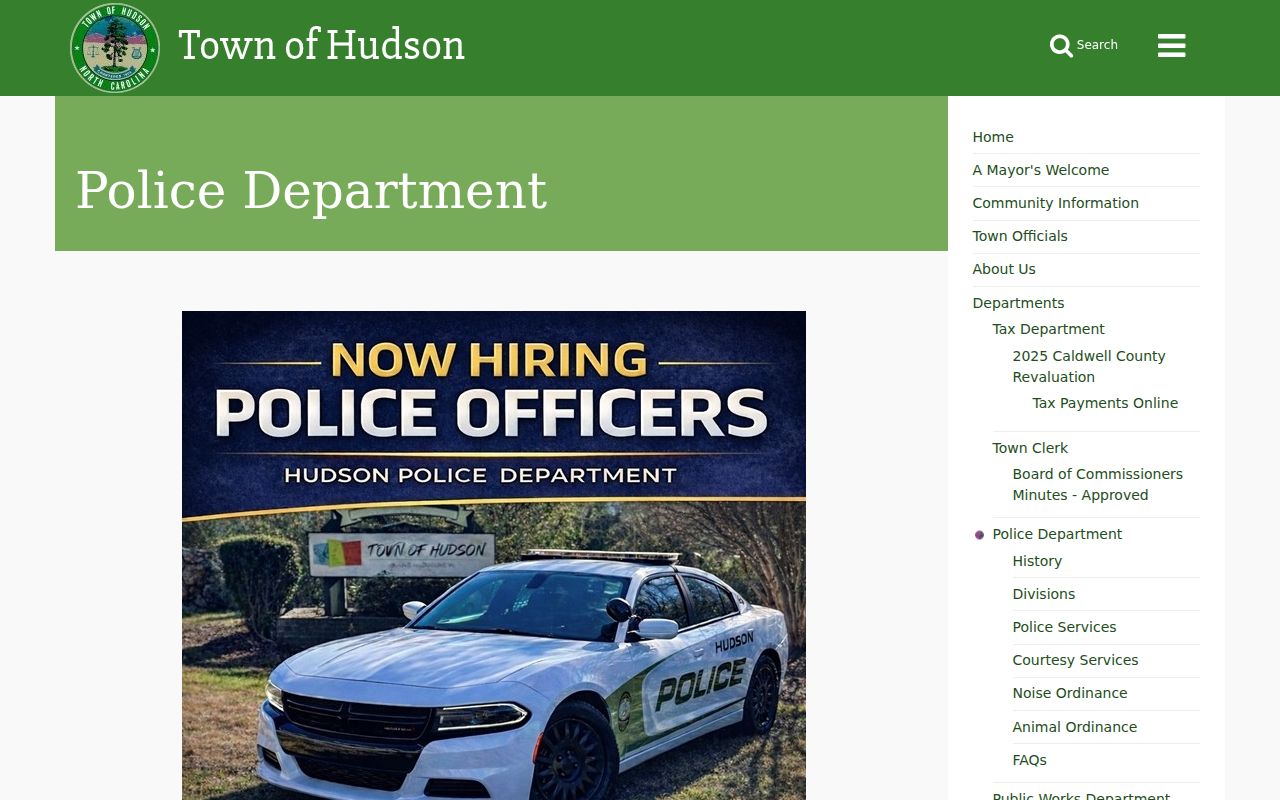
The Hudson Police Department listing draws a town-and-agency boundary. It says nothing about charges, court outcomes, or any person's record. For an actual court document, the North Carolina court-record guide sends you to the court custodian. It does not send you to a law-enforcement agency. The NCAOC public-record request route covers state administrative records, not local Hudson court files.
| Hudson information requested | Responsible route |
|---|---|
| Town or police agency matter | Hudson town or police channel |
| Eligible state case information | North Carolina eCourts Portal |
| Scheduled state hearing | Caldwell calendar or Search Hearings |
| Local court file or certification | Caldwell Clerk of Superior Court |
| NCAOC administrative record | State public-record request route |
Inside the Hudson Municipal Court?
Hudson has no separately published municipal court or public municipal-docket interface. That is a key access boundary for Hudson readers. It does not wipe out town services or agency records. The published judicial routes for a Hudson question are instead the Caldwell Clerk, the North Carolina eCourts Portal, and the official state calendar resources.
Hudson sits inside Caldwell County's unified North Carolina court structure. The city name helps you get oriented. It is not a court name, though, and not the record custodian. Before picking an office, a Hudson reader should sort out the request. It may involve a town record, a police agency record, an eligible online case record, or a Clerk-held court file. That choice saves a wasted trip.
Note: No separately published Hudson municipal court docket exists among the official sources for this county.
Hudson Court Information Lifecycle
Hudson court information moves through stages, and each stage can sit with a different custodian. An incident may start as a Hudson agency record. A state filing, if one happens, opens a court case. Hearings then show up in scheduling tools. A final order or judgment becomes a Clerk-held court record. A state administrative request is yet another route. One stage existing does not mean every other stage exists or is public.
Record flow: Hudson agency information, if any › state court filing › Portal Case Summary and calendar information where eligible › Caldwell Clerk file or certification.
That Hudson distinction also explains why an agency contact cannot settle a court-date question. The police channel handles agency matters; a state calendar handles a setting; the Clerk resolves a specific court-file question. Name the Hudson record type before you ask, and you dodge an avoidable handoff.
- Case Summary
- The Portal’s available Register of Actions view for an eligible Hudson-related case.
- Calendar
- A Hudson-related court schedule, not a final decision.
- Certified copy
- A Clerk-authenticated court copy, distinct from an online display.
Finding Hudson Court Dates
Check any Hudson court date against a current state source. Use Portal Search Hearings or the official Caldwell criminal calendar when the question is whether a matter is scheduled. Civil settings run through the Caldwell civil calendar. NCAOC warns that weather can force rescheduling. If your Hudson notice and the online information disagree, the published Clerk route is the way to confirm it.
Read Hudson court dates as setting information. A hearing field can change. A calendar listing does not prove a result. A disposition field, by contrast, reports a recorded resolution or status. Knowing that vocabulary helps a Hudson reader tell a scheduled appearance from an entry that records what happened later.
| Date | The current published Hudson-related state court setting, subject to change. |
|---|---|
| Time | The time shown in the current scheduling source, when published. |
| Courtroom | A current assignment field if the official source lists one. |
| Judicial officer | An assignment field, not a guarantee that the event will proceed unchanged. |
| Setting type | The hearing, status, trial, or other category shown for the case. |
Hudson Hearing Search Checks
Need a Hudson hearing date? Skip the general web search and use the tool built for court calendars. NCAOC's Search Hearings lets you query several ways. Search by case number, party or business, attorney or bar number, judicial officer, or courtroom. A Hudson case number works best of all. When a result comes back, check the details. It should list Caldwell County and the right case reference before you count on the date.
A missing match is not the same as no record. NCAOC flags conversion history, restricted records, and technical limits. So a name might fail because of a spelling slip, a bad number, an expunged or confidential matter, a paper-file gap, a different county, or simply no matching case. One empty search does not clear a person's history. If you know a public file exists, ask the Clerk. Skip stretching a name search into a dossier.
Note: A Hudson calendar entry is a schedule. Confirm an uncertain date with the Clerk before relying on it.
Hudson Traffic Ticket Lookups
A traffic ticket written by Hudson police lands in state court, not a town tribunal. In Caldwell County's structure, District Court takes traffic matters, misdemeanors, and infractions. Where the officer pulled you over changes nothing about the division. Start with what the citation itself gives you. It prints the court date, the case number, and the instructions. If any of that is unclear, check the state Portal, the calendar, or the Clerk.
Not every ticket can be paid the same way. Official payment channels cover only eligible obligations. Paying is a choice separate from contesting one. A town police contact cannot set court dates or decide payment eligibility. The full county process is laid out in Caldwell County Traffic Court.
Hudson Court Divisions by Case
Hudson sits inside Caldwell County, but the town line does not assign cases to courts. North Carolina routes matters by case type and subject matter. So District Court and Superior Court split the work by rule rather than geography. That matters for anyone hunting the right state court record. A party, a witness, a reporting agency, or the incident itself can carry a Hudson address. The court division's responsibility stays the same either way.
| Hudson-related matter | General state court path |
|---|---|
| Traffic, misdemeanor, or infraction | District Court |
| Family, juvenile, or qualifying civil matter | District Court, subject to access rules |
| Felony or civil dispute over $25,000 | Superior Court |
| Qualifying small claim up to $10,000 | State magistrate process |
Routing facts do not equal open access. Juvenile files and other protected material follow separate rules that limit who may see them. The table picks a court path. It predicts no outcome and suggests no legal strategy.
How Hudson Cases Reach County
When a Hudson matter becomes a state court case, it enters the same Caldwell County framework that serves every other incorporated municipality in the county. The trial divisions are District Court and Superior Court. For eligible public state information, the Portal is the online route. The Caldwell Clerk keeps the local court records, files, dockets, and indexes. Hudson adds no judicial layer between its residents and those state offices.
Docket flow: Hudson town or agency record, if any › Caldwell County District or Superior Court case › Portal or calendar information where eligible › Clerk-held court file.
That structure leaves Hudson readers with a simple choice. Town and police contacts handle agency questions; the state court system handles court matters. For a countywide view of how it all fits together, see the Caldwell County court docket overview.
Hudson Court Systems Boundary
A Hudson address never turns a federal filing into a Caldwell Clerk record. Federal cases belong to the Western District of North Carolina. That is a system with dockets all its own. The court where the case was filed decides where you look. Through CM/ECF, that court supplies federal filing and docket information. PACER serves as the public electronic access route. Neither one substitutes for the state Portal on Hudson-related North Carolina state cases.
The official CM/ECF information source lays out the separate federal case-information system. That system is what marks this boundary.
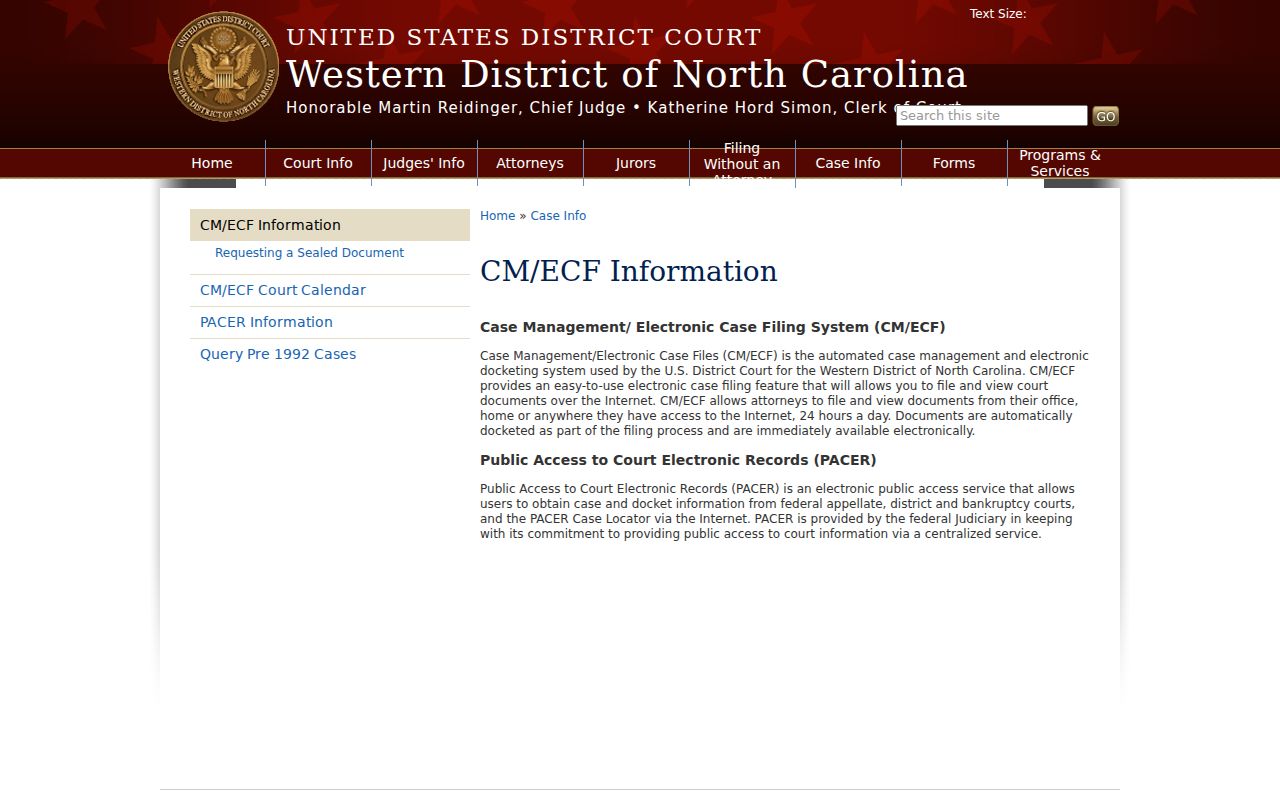
Keep the searches separate. A federal docket, a Clerk file, a city agency record, and a state Portal result are different classes of records with different access processes. Mixing them invites errors.
Who Can See Hudson Court Records
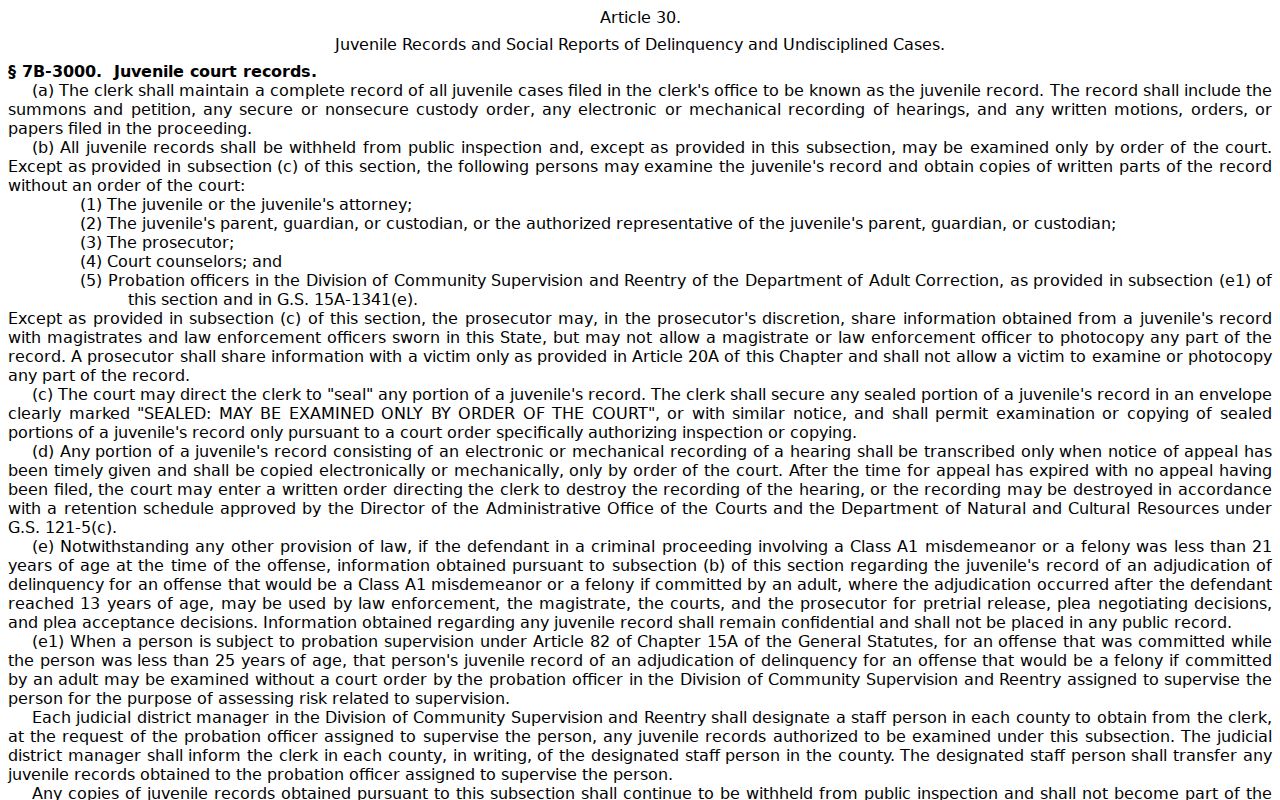
Public access to Hudson court records is case by case. G.S. 7A-109 puts records, files, dockets, and indexes with the Clerk. It allows access during ordinary hours unless a law says otherwise. NCAOC adds that sealed and confidential cases or documents never appear in the Portal. So assume nothing: not every court document is online, and not every one is public.
The juvenile confidentiality statute shows how some Hudson records stay closed. That closure is by design rather than by accident.
Before chasing a Hudson court document, ask whether that specific item is public and available from the Clerk. An online Case Summary can identify the case. It cannot override confidentiality or produce a certified copy.
Key Rules:
G.S. 7A-109: The Clerk maintains court records and public access remains subject to legal limits.
G.S. 7B-3000: Juvenile records are protected by statutory confidentiality.
G.S. 15A-151: Expunged records have disclosure restrictions.
Hudson Court Search Limits
A Hudson docket search works best as a starting point. Treat the screen that way, not as the whole file. Caldwell County joined eCourts on October 13, 2025. NCAOC says older records were converted into Enterprise Justice. Still, a paper file at the courthouse can hold history that never made it online. So a Hudson Portal result, a calendar entry, or even a no-result screen tells you something. It just is not the last word on a case. Before ordering a court record, figure out which format you actually need. A plain copy differs from a certified copy, a certificate under seal, an exemplification, a transcript, or an audio recording of a hearing. Each format carries its own rules and possible charges. The Clerk of Caldwell County Superior Court can walk you through a court-file request. Audio may require form AOC-G-114 where that form applies. Ask about availability and current cost before you commit.
Caldwell Clerk of Superior Court
Hudson court-file, copy, certification, and access questions follow the county Clerk route.
828-759-3500
216 Main St. NW, Lenoir, NC 28645